
Don't throw your old clothes in the trash: these brands "pay" you to return them

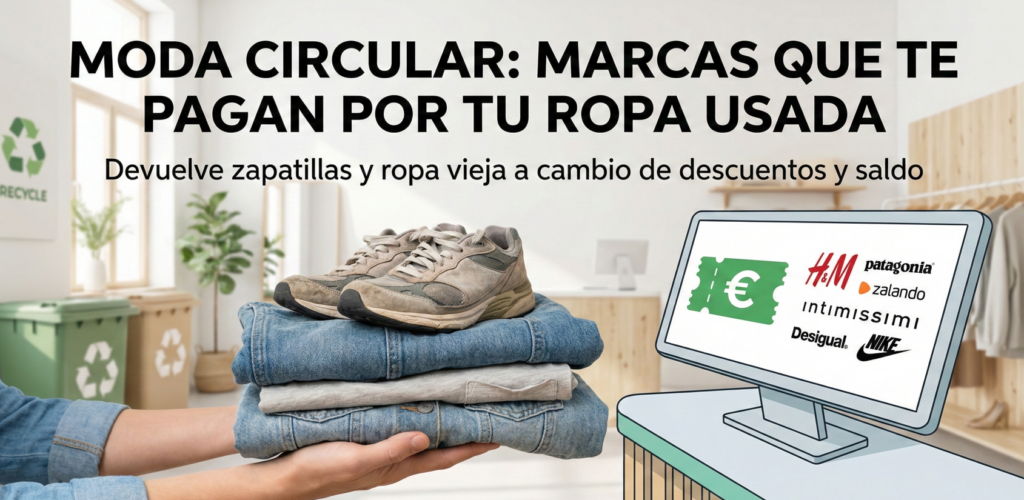
Let's be honest, we all have that chair in the room covered with clothes or a drawer full of t-shirts we haven't worn in three years. When we finally get the urge to tidy up, throwing them away brings a mix of ecological guilt and financial pain.
The textile industry knows this. It knows the "buy, use, and throw away" model is exhausted, not only because consumers demand more responsibility, but also because European regulations are tightening the screws to force brands to take responsibility for their own waste.
This is where circular fashioncomes into play. Suddenly, your old clothes regain value. But, as a journalist and industry observer, I'll be straightforward: no one is going to wire you money for your worn-out sweatshirtThe "payment" always comes in the form of store credit, gift cards, or discount vouchers. It's a clever move: you free up space feeling like you're doing the right thing, and the brand ensures your next purchase is with them.
For the readers of lampiere.es who want to clear out their closet wisely and earn a real benefit, here is an in-depth analysis of the return programs that actually work.
Who gives what and under what fine print
Not all recycling programs are the same. Some promote true circularity (repair and resell), while others border on greenwashingshredding your clothes to make car insulation (what we call downcycling or under-recycling). Here are the benchmarks:
Patagonia and Its Worn Wear Program
Patagonia doesn't want you to recycle; they want you to repair. Their model is the most honest in the industry. They don't accept ruined garments to make rags; they buy your used gear to clean, repair, and resell it.
-
What they look for: Jackets, pants, and equipment from their brand that work perfectly (intact zippers, no major tears).
-
The reality of payment: They offer store credit that varies depending on the garment. A technical jacket in good condition can earn you substantial credit for your next purchase. It's circular economy at its finest.
Levi's SecondHand
Denim fabric is one of the most polluting to produce, but also one of the most durable. Levi's has understood that the market vintage for their own jeans is a multi-million dollar business.
-
What they look for: Jeans, denim jackets, and shorts from the Levi's brand.
-
The reality of payment: You take your jeans to a participating store and receive a gift card. The value depends on the age and condition. If the garment is too damaged to resell, they give you a symbolic voucher and take care of recycling it properly.
Zalando Pre-owned
Zalando has gamified closet cleaning. They have integrated a system where your online purchase history becomes your sales catalog.
-
What they look for: Clothing from the thousands of brands they sell, but they require it to be almost flawless. They don't accept garments with pilling, shrinkage, or stains.
-
The reality of payment: You select the garment in your profile, the app makes an automatic offer, and if you accept, you pack everything in a box and send it for free. The balance is added to your Zalando account or, if you feel generous, you can donate it directly from the platform to charitable causes.
H&M and Zara
The giants of fast fashion have the most accessible programs, but they are also the most questioned due to the volume they handle.
-
What they look for: In both cases, any textile. From a torn t-shirt from another brand to old sheets.
-
The reality of payment: H&M gives you a coupon (usually €5 for purchases over €30) for every medium bag you hand in. Zara, on the other hand, doesn't give you money for leaving clothes in their containers, but recently launched its platform Pre-Owned so you can sell Inditex clothes to other users, taking a small commission for managing the platform.
The industry’s headache is sports sneakers
If recycling a cotton t-shirt is relatively easy, recycling a sneaker is an engineering nightmare. Some sneakers standard ones have dozens of components glued with industrial adhesives: rubber, EVA foam, leather, polyester mesh, and plastic. Separating this is costly and complex.
Nike and the Sustainable Shredder
Nike has been running its program for years Reuse-A-Shoe. They accept sneakers of any brand that are no longer wearable. Instead of trying to separate the materials cleanly, they shred them together to create Nike Grind, a granulated material used to make basketball court floors, running tracks, and soles of new sneakers. In return, through their app or in-store, they usually offer percentage discounts on new collections.
Additionally, with their program Nike Refurbished, they collect returned sneakers with minor factory defects or barely used, clean them by hand, and put them back on their store shelves outlet with discounts of up to 50%.
Tips Before Donating Your Clothes
My advice before you grab the trash bag and head to the mall is this:
-
Don’t fall into the consumption trap: If you drop off a bag of old clothes at a store just to get a 15% voucher and end up buying three t-shirts you didn’t need, the brand wins and the planet loses. Use vouchers only for planned purchases.
-
Wash and sort: Brands that do direct resale (like Zalando or Patagonia) will reject items that smell musty or have treatable stains. Wash them first; their appraisal value will increase.
-
Difference between reselling and recycling: If your garment is branded (Bimba y Lola, North Face, Levi's) and is new, you’ll always get more money selling it yourself on Vinted or Wallapop. Use store programs for lower-value, heavily worn clothes or for beat-up sneakers no one would buy.
Circular fashion isn’t a passing trend; it’s the only viable future for our wardrobes. Taking advantage of these programs is a smart way to refresh your style while minimizing your environmental footprint.
Leave a reply